
Introduction
Rubber is everywhere.
-
Rubber rollers in printing presses and industrial conveyors
-
Rubber seals keeping your car weather-tight
-
Rubber profiles for windows, doors, and appliances
-
Rubber sheets for gaskets, pads, and flooring
But grinding rubber? That's not as simple as it sounds.
Rubber is soft, elastic, and heat-sensitive. Grind it with the wrong wheel, and you get:
-
❌ Tearing and fuzzing
-
❌ Burning and discoloration
-
❌ Smearing and loading
-
❌ Inconsistent surfaces
-
❌ Short wheel life
The solution is electroplated diamond grinding wheels.
And when you add a lightweight drilled body and a re-plating service, you get a wheel that not only grinds rubber beautifully but also saves you significant money over time.
In this article, we'll explain why electroplated diamond is the best choice for rubber, how a drilled body improves handling, and why re-plating is the smartest economic decision for high-volume rubber grinding.
Part 1: The Challenge of Grinding Rubber
Let's first understand why rubber is so difficult to grind.
Rubber Properties That Cause Problems:
| Property | Grinding Challenge |
|---|---|
| Soft | Tears instead of cutting cleanly |
| Elastic | Deforms under pressure – inconsistent removal |
| Heat-sensitive | Burns and discolors at low temperatures |
| High friction | Generates heat quickly |
| Sticky / tacky | Loads up grinding wheels |
What Happens with Conventional Wheels:
| Wheel Type | Problem |
|---|---|
| Alumina wheel | Dulls quickly, generates heat, burns rubber |
| Silicon carbide wheel | Better but still loads up |
| Sintered diamond wheel | Works but expensive and runs hot |
| Resin bond wheel | Moderate performance, shorter life |
The result: Poor finish, burned parts, frequent wheel changes, and high costs.
Part 2: Why Electroplated Diamond Is Best for Rubber
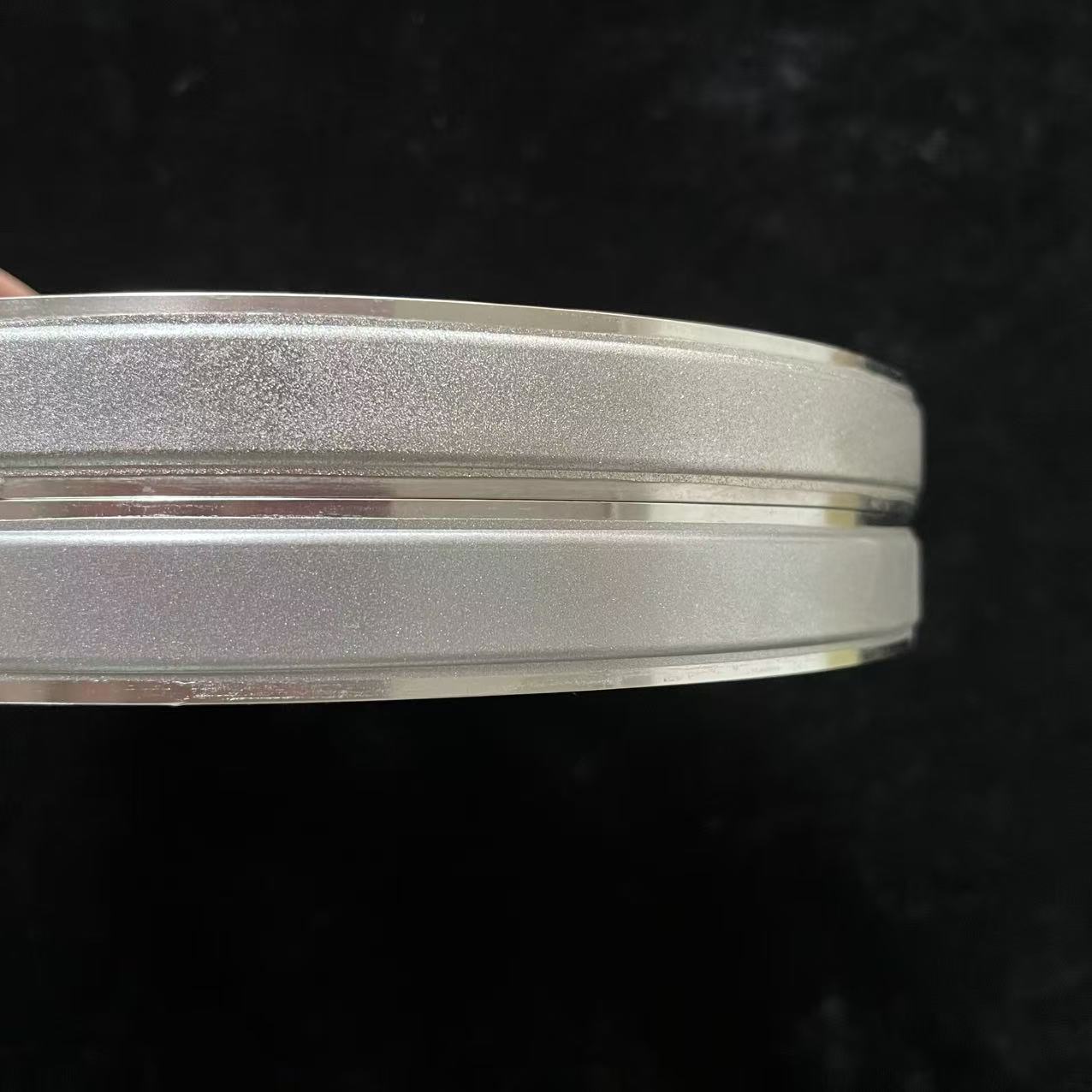
Electroplated diamond wheels are fundamentally different from other abrasive wheels.
How Electroplated Wheels Are Made:
Diamond grit is suspended in a nickel plating solution and electrochemically bonded to a steel core in a single layer. The diamond grains stand tall, with maximum exposure.
Why This Works for Rubber:
| Feature | Benefit for Rubber Grinding |
|---|---|
| Single layer, high exposure | Extremely sharp diamond cuts cleanly – no tearing |
| Open structure | Rubber dust falls away – no loading |
| No bond matrix | No surface for rubber to stick to |
| Thin profile | Allows precise shaping of rubber profiles |
| Sharp cutting action | Low friction = low heat = no burning |
Electroplated vs. Other Bond Types for Rubber:
| Bond Type | Sharpness | Heat Generation | Loading Resistance | Cost | Best for Rubber? |
|---|---|---|---|---|---|
| Electroplated | ⭐⭐⭐⭐⭐ | Very low | Excellent | Moderate | Yes – best choice |
| Sintered | ⭐⭐⭐ | Moderate | Good | High | Acceptable |
| Resin | ⭐⭐⭐⭐ | Moderate | Moderate | Moderate | Good |
| Alumina/SiC | ⭐⭐ | High | Poor | Low | No |
Part 3: The Lightweight Drilled Body – Why It Matters
A standard 250mm grinding wheel with a solid steel body is heavy.
| Wheel Type | Approximate Weight | Handling Difficulty |
|---|---|---|
| Solid steel body | 5-8 kg | Heavy, awkward |
| Drilled body (this wheel) | 3-5 kg | 20-40% lighter |