
Introduction
In the world of carbide cutting tools, the edge is everything.
A sharp, well-prepared edge:
-
Cuts cleaner
-
Lasts longer
-
Produces better surface finishes
-
Reduces tool pressure and heat
But achieving that perfect edge requires the right tool.
That's where a resin bond diamond bevel / chamfer grinding wheel comes in.
Specifically designed for chamfering, edge grinding, and beveling of tungsten carbide tools, this 100mm wheel delivers consistent, precision edges – tool after tool.
In this article, we'll explain why chamfering matters, why diamond is required for carbide, and how this wheel helps you achieve better tool performance.
Part 1: Why Chamfer Carbide Cutting Tools?
A chamfer – a small angled edge – is more than just a cosmetic feature. It's a functional necessity.
What a Chamfer Does:
| Benefit | Explanation |
|---|---|
| Reduces edge chipping | A chamfer strengthens the cutting edge |
| Improves tool life | Less edge damage = longer tool life |
| Better surface finish | Cleaner entry into the workpiece |
| Reduces cutting forces | Smoother engagement with the material |
| Prepares for coating | Coating adhesion is improved on chamfered edges |
When Chamfering Is Required:
| Application | Why Chamfering Is Needed |
|---|---|
| Carbide inserts | Standard edge preparation for turning tools |
| End mills | Edge rounding to prevent chipping |
| Drills | Cutting edge preparation for better drilling performance |
| Reamers | Precision edge preparation |
| Indexable tools | Edge preparation for consistent performance |
Part 2: Why Diamond for Tungsten Carbide?
Tungsten carbide is one of the hardest materials used in manufacturing.
Abrasive Suitability:
| Abrasive | Tungsten Carbide | Reason |
|---|---|---|
| Diamond | ⭐⭐⭐⭐⭐ | Hardest – cuts carbide efficiently |
| CBN | ⭐⭐ | Not hard enough for carbide |
| Silicon Carbide | ❌ | Not suitable |
| Alumina | ❌ | Not suitable |
Why Resin Bond Diamond?
| Bond Type | Characteristics | Suitability for Carbide Chamfering |
|---|---|---|
| Resin bond | Sharp, cool cutting, self-sharpening | ⭐⭐⭐⭐⭐ Excellent |
| Ceramic bond | Hard, good form-holding | ⭐⭐⭐⭐ Good |
| Metal bond | Long life, runs hot | ⭐⭐⭐ Acceptable |
| Electroplated | Single layer, short life | ⭐⭐ Poor for production |
Resin Bond Advantages for Carbide Chamfering:
| Feature | Benefit |
|---|---|
| Sharp cutting action | Clean, precise chamfers |
| Cool grinding | No thermal damage to carbide |
| Self-sharpening | Consistent performance |
| Good surface finish | Smooth chamfer surfaces |
| Cost-effective | Good balance of life and performance |
Part 3: The Bevel / Chamfer Profile – Why Shape Matters
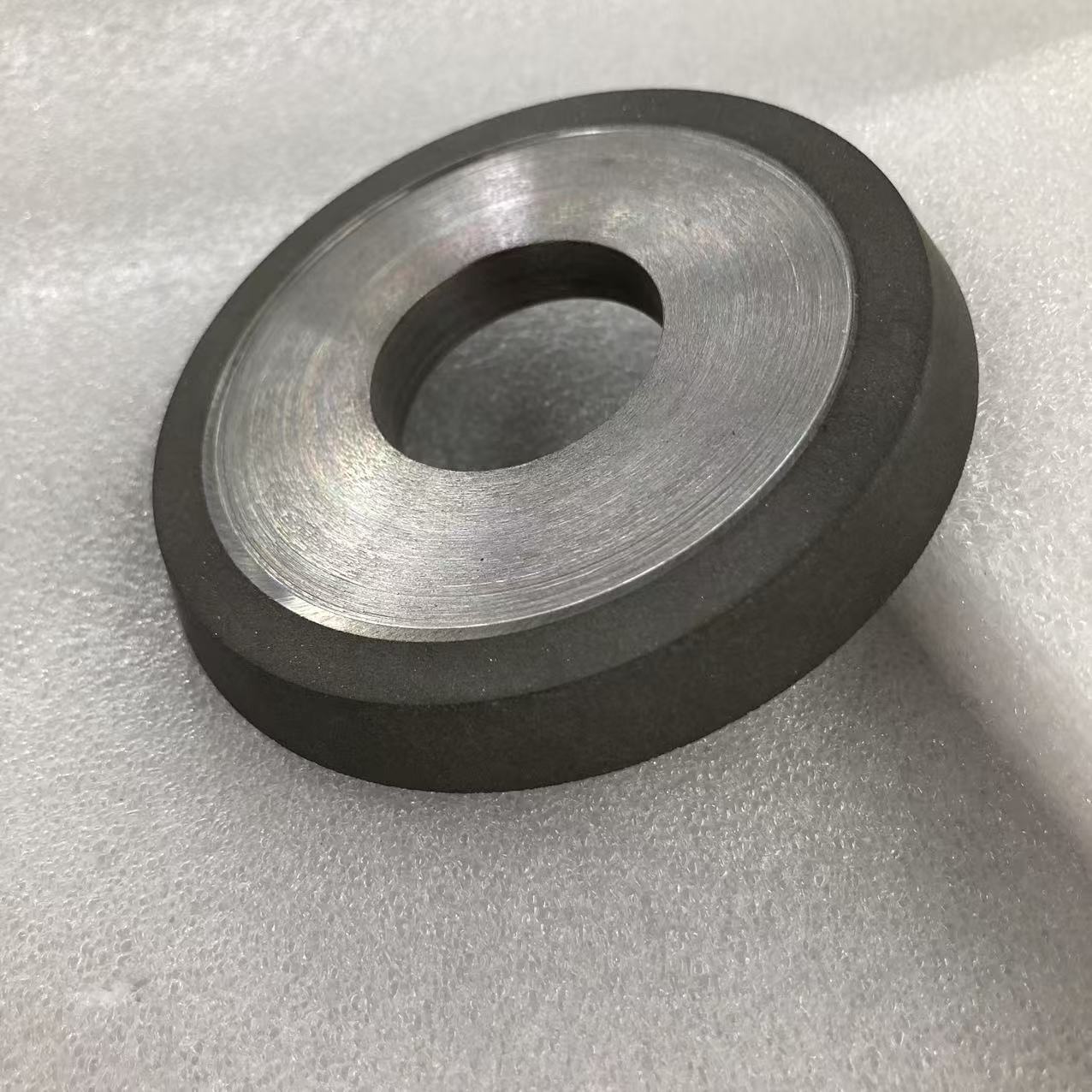
This wheel is not a standard flat wheel. It has a bevel / angled face – designed specifically for chamfering operations.
How the Bevel Profile Works:
| Feature | Benefit |
|---|---|
| Angled face | Grinds the chamfer angle directly |
| Precision geometry | Consistent chamfer angle every time |
| Single-pass grinding | Chamfer completed in one operation |
| No complex setup | Simple positioning against the tool edge |