Introduction
Fiberglass profiles are everywhere.
-
Handrails and ladder rails
-
Electrical insulation rods
-
Structural supports in construction
-
Pultruded profiles for countless industrial applications
Many of these profiles start as square or rectangular cross-sections. But many applications require round profiles – smooth, consistent, and ready for use.
The traditional method? Slow, labor-intensive sanding or grinding. Multiple steps. Inconsistent results. Lots of dust.
But there's a better way.
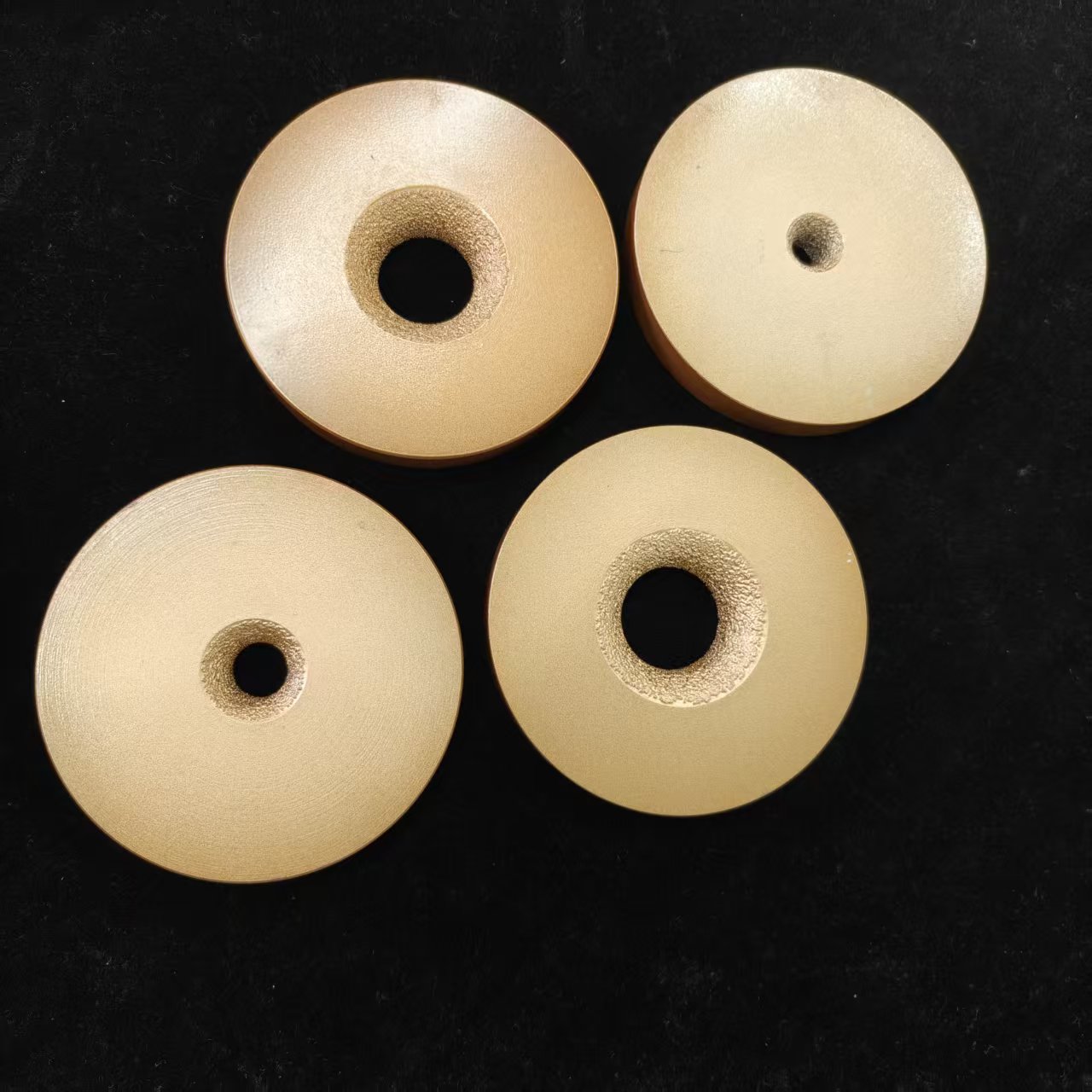
The 100mm brazed diamond grinding wheel with tapered bore and internal diamond coating can convert a square fiberglass profile into a round profile in a single pass.
In this article, we'll explain how this unique wheel works, why it's the most efficient solution for fiberglass finishing, and how it can transform your production process.
Part 1: The Challenge – Square to Round
Fiberglass profiles are typically produced by pultrusion – a continuous process that pulls resin-impregnated fibers through a heated die.
Common Pultruded Shapes:
| Shape | Common Applications | Need for Rounding |
|---|---|---|
| Square rod | Handrails, structural supports | Often needs rounding for smooth handling |
| Rectangular profile | Ladder rails, beams | May need rounding for specific applications |
| Square tube | Electrical enclosures, frameworks | Interior surfaces may need smoothing |
Why Square Profiles Need Rounding:
| Application | Reason for Rounding |
| :--- | :--- | :--- |
| Handrails | Sharp corners are uncomfortable; round is more ergonomic |
| Electrical insulation rods | Round rods are standard for many electrical applications |
| Shafts and dowels | Round shafts fit bearings and bushings |
| Decorative profiles | Round shapes are more aesthetically pleasing |
| Fittings and connectors | Round profiles mate with round fittings |
The Traditional Process:
| Step | Method | Problems |
|---|---|---|
| 1 | Cut square profile to length | Dust, time |
| 2 | Grind corners with belt sander | Inconsistent, slow, labor-intensive |
| 3 | Smooth surface with sanding | More time, more dust |
| 4 | Finish with polishing | Additional step |
Result: Slow, labor-intensive, inconsistent quality, excessive dust.
Part 2: The Solution – The Tapered Bore Diamond Wheel
This wheel is specifically designed to solve the square-to-round problem.
How It Works:
| Component | Function |
|---|---|
| Tapered bore | Guides the square profile smoothly into the grinding zone |
| Internal diamond coating | Grinds the corners of the square profile as it passes through |
| 100mm diameter | Standard size for most fiberglass finishing equipment |
| Brazed diamond | Sharp, aggressive, long-lasting |
The Process:
| Step | Action |
|---|---|
| 1 | Square fiberglass profile is inserted into the tapered bore |
| 2 | The taper guides the workpiece toward the narrow section |
| 3 | Internal diamond contacts the four corners of the square profile |
| 4 | Corners are ground away as the workpiece passes through |
| 5 | Round profile exits the wheel – ready for use |
One pass. One wheel. Square to round.
Part 3: The Tapered Bore Advantage
The tapered bore is the key to this wheel's effectiveness.
| Feature | Benefit |
|---|---|
| Self-centering | The taper naturally centers the workpiece |
| Gradual engagement | Prevents chattering and vibration |
| Smooth feeding | Allows easy insertion and consistent feeding |
| Even material removal | Taper ensures consistent grinding pressure |
| Reduced wear | Guides workpiece smoothly – less stress on the diamond |
How the Taper Works:
| Stage | Bore Diameter | Workpiece Contact |
|---|---|---|
| Entry | Wider | No grinding – workpiece enters easily |
| Middle | Gradual taper | Diamond begins to contact corners |
| Exit | Narrower | Full corner grinding – round profile emerges |