
Introduction
Chrome-plated rolls are everywhere in heavy industry.
-
Steel mills – work rolls and backup rolls
-
Printing industry – chrome-plated printing cylinders
-
Paper industry – calender rolls and dryer rolls
-
Plastic film industry – chill rolls and embossing rolls
-
Textile industry – various rollers
These rolls are massive, expensive, and critical to production. When they need grinding – for resurfacing, profile correction, or surface finish improvement – the grinding wheel you choose matters enormously.
Chrome plating is hard. Really hard. Typically 800-1,100 HV – harder than most hardened steels. Conventional abrasives (alumina, silicon carbide) wear out quickly, generate heat, and can damage the chrome surface.
The solution? Resin bond CBN grinding wheels.
In this article, we'll explain why resin CBN is the best choice for chrome roll grinding, how to use it effectively, and what results you can expect.
Part 1: The Challenge of Grinding Chrome Plating
Let's first understand what makes chrome plating difficult to grind.
Chrome Plating Properties:
| Property | Value | Grinding Challenge |
|---|---|---|
| Hardness | 800-1,100 HV | Wears out conventional abrasives quickly |
| Brittleness | High | Heat can cause cracking |
| Thickness | 0.01-0.5mm | Grinding must be precise – can't remove too much |
| Surface finish required | Often Ra 0.05-0.2 μm | Requires fine grit and proper technique |
| Heat sensitivity | High | Thermal damage = scrap roll |
What Happens with Conventional Wheels:
| Wheel Type | Problem |
|---|---|
| Alumina | Wears quickly; generates heat; produces poor finish |
| Silicon Carbide | Better than alumina but still short life |
| Metal CBN | Good but runs hot; can burn chrome |
The result: Frequent wheel changes, high cost, inconsistent surface finish, and risk of damaging expensive chrome rolls.
Part 2: Why CBN for Chrome Plating?
CBN (Cubic Boron Nitride) is the second-hardest material known, after diamond.
| Abrasive | Hardness (HV) | Suitability for Chrome | Why |
|---|---|---|---|
| CBN | ~4,500 | ⭐⭐⭐⭐⭐ Excellent | Hard enough; stable with ferrous metals |
| Diamond | ~10,000 | ❌ Not recommended | Reacts with iron at high temperature |
| Silicon Carbide | ~2,500 | ⭐⭐⭐ Moderate | Wears quickly |
| Alumina | ~2,000 | ⭐⭐ Poor | Not hard enough for production |
CBN Advantages for Chrome Roll Grinding:
| Feature | Benefit |
|---|---|
| Extreme hardness | Grinds hard chrome efficiently |
| Thermal stability | Maintains sharpness at high temperatures |
| Chemical inertness | No reaction with iron/ferrous metals |
| Sharp cutting edges | Produces good surface finish |
| Long wheel life | 5-20x longer than conventional wheels |
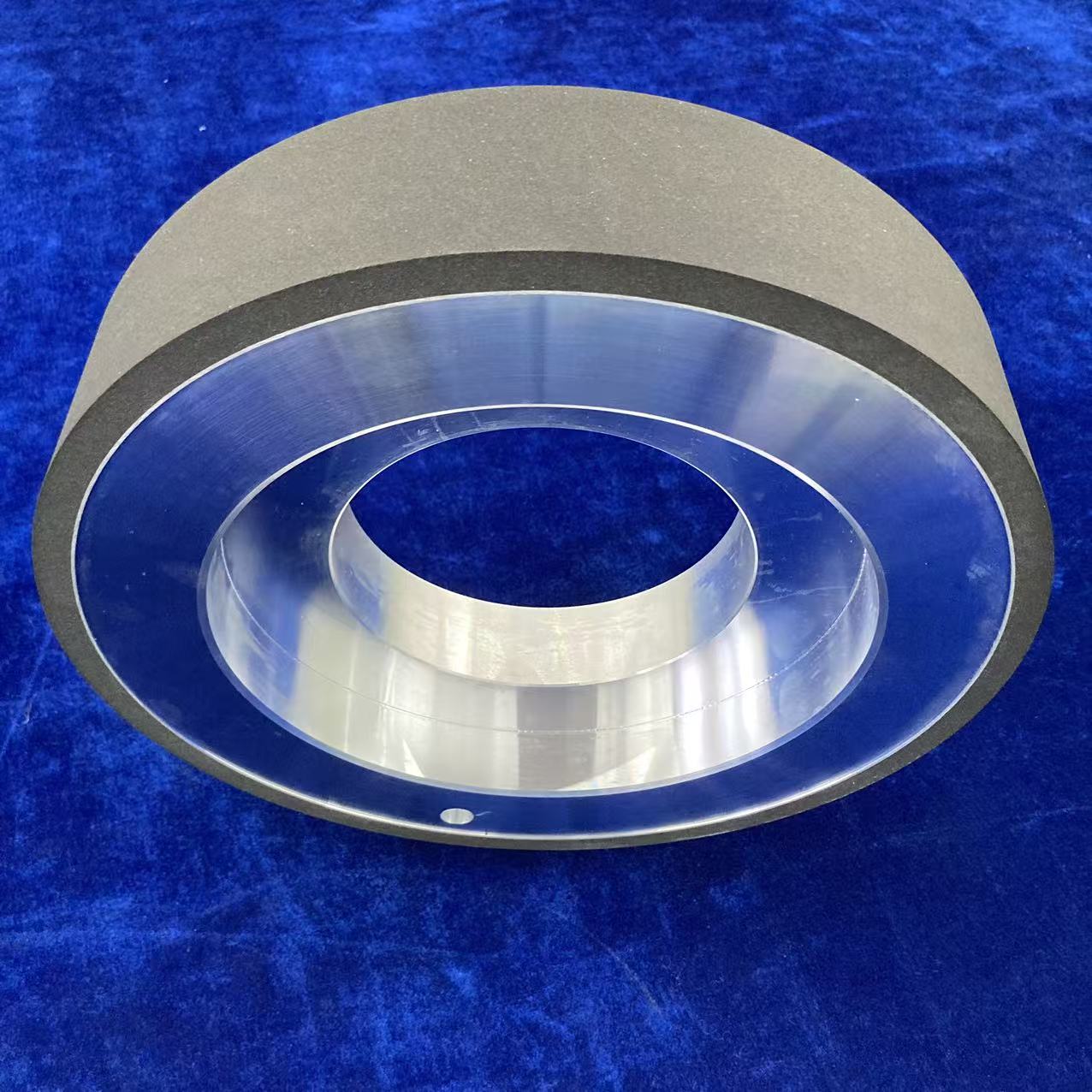
Part 3: Why Resin Bond for Chrome Rolls?
There are several bond types for CBN wheels. For chrome roll grinding, resin bond is often the best choice.
| Bond Type | Heat Generation | Surface Finish | Life | Cost | Best For |
|---|---|---|---|---|---|
| Resin | Low | Excellent | Good | Moderate | General chrome grinding |
| Vitrified | Medium | Very good | Very long | High | High-volume production |
| Metal | High | Good | Very long | High |