
Introduction
If you work in a tool room, die shop, or mold shop, you know the punch grinder.
Also called a punch former or profile grinder, this machine is essential for processing round bars into precision punches, ejector pins, core pins, and other cylindrical components.
But here's the thing: the wheel you use makes all the difference.
-
Too hard? You'll burn the workpiece.
-
Too soft? The wheel wears out in minutes.
-
Wrong abrasive? You'll be dressing constantly.
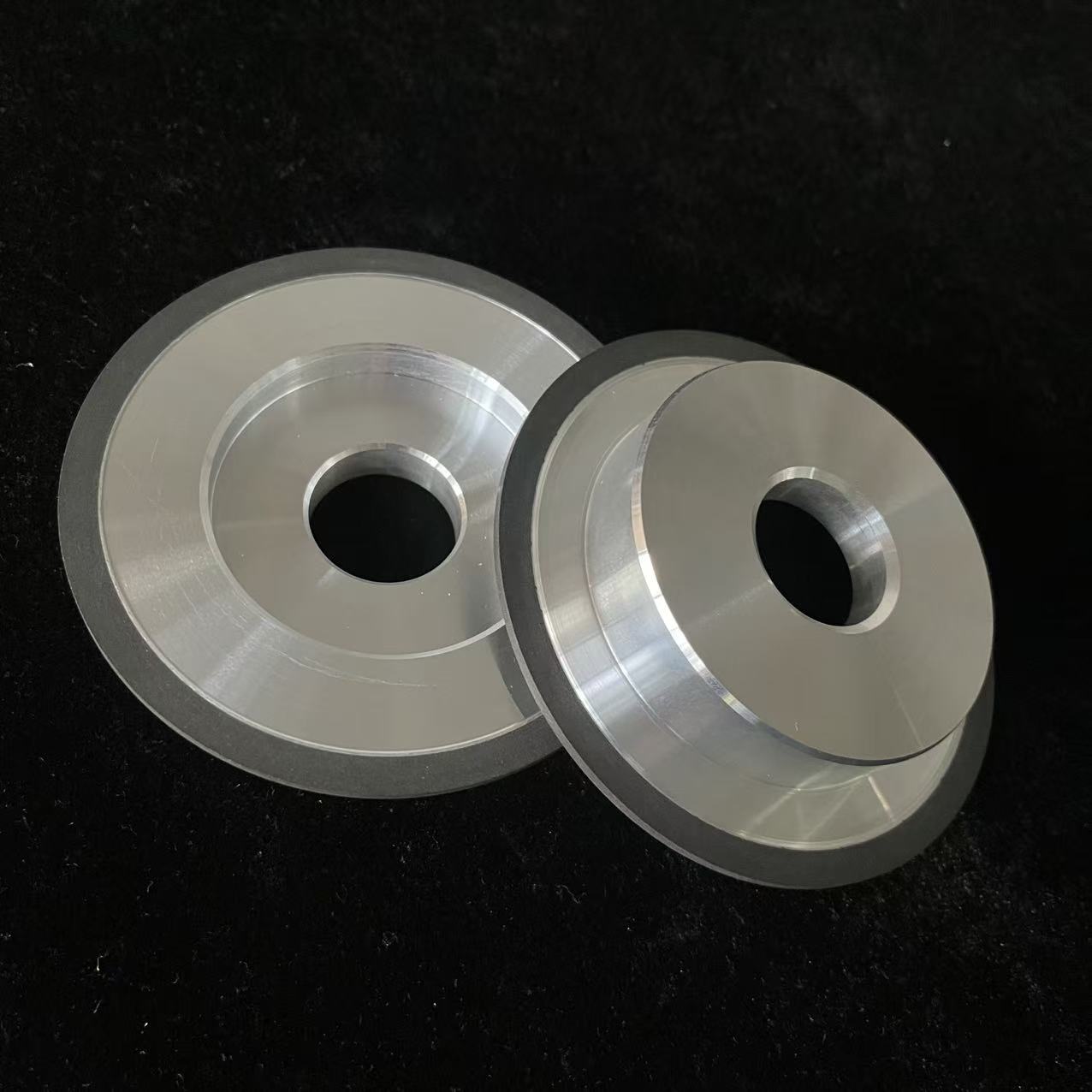
The industry standard for punch grinders is the resin bond CBN grinding wheel – typically 100mm diameter, with CBN abrasive in a resin bond matrix.
In this article, we'll explain why resin bond CBN is the right choice for punch grinding, how to select the right grit, and how to get the best performance from your wheel.
Part 1: What Is a Punch Grinder / Punch Former?
Let's start with the machine itself.
What It Does:
A punch grinder is a specialized cylindrical grinding machine designed for processing round bars and cylindrical components. Unlike a standard cylindrical grinder, a punch grinder is optimized for:
| Operation | Description |
|---|---|
| OD grinding | Reducing diameter to precise size |
| Step grinding | Creating stepped diameters |
| Radius grinding | Grinding radii on punch tips |
| Taper grinding | Creating tapered profiles |
| Shoulder grinding | Grinding shoulders and flanges |
Typical Workpieces:
| Workpiece | Typical Material | Hardness |
|---|---|---|
| Punches | Tool steel, HSS | HRC 55-62 |
| Ejector pins | Tool steel | HRC 55-60 |
| Core pins | Tool steel, HSS | HRC 58-62 |
| Guide pins | Bearing steel | HRC 60-64 |
| Round bars | Various hardened steels | HRC 50-65 |
Common Machine Brands:
| Brand | Models |
|---|---|
| Wasino | G-Series |
| Amada | Punch grinders |
| Proth | Punch formers |
| Chevalier | Punch grinders |
| Kent | Punch grinders |
| Okamoto | Punch grinders |
Part 2: Why CBN for Punch Grinding?
Here's the critical point: punch grinder workpieces are always hardened steel.
Hardened steel (HRC 50-65) cannot be ground efficiently with conventional abrasives.
Abrasive Comparison for Hardened Steel:
| Abrasive | Suitability | Why |
|---|---|---|
| CBN | ⭐⭐⭐⭐⭐ Excellent | Hardest after diamond; chemically stable with iron |
| Diamond | ❌ Not recommended | Reacts with iron at high temperatures (graphitization) |
| Alumina | ⭐⭐ Poor | Wears quickly; generates heat |
| Silicon carbide | ⭐ Poor | Too brittle |
CBN (Cubic Boron Nitride) is the correct abrasive for grinding hardened steel. It is:
-
Extremely hard – second only to diamond
-
Thermally stable – maintains hardness at high temperatures
-
Chemically inert – no reaction with ferrous metals
-
Sharp – produces good surface finish
-
Long-lasting – wheel life measured in months, not days
Part 3: Why Resin Bond for Punch Grinding?
CBN abrasive needs a bond to hold it in place. There are three common bond types for CBN wheels.
Bond Type Comparison:
| Bond Type | Characteristics | Suitability for Punch Grinding |
|---|---|---|
| Resin bond | Moderate hardness, good shock absorption, cool cutting | ⭐⭐⭐⭐⭐ Excellent |
| Vitrified bond | Hard, rigid, good form holding | ⭐⭐⭐ Good (less forgiving) |
| Metal bond | Very hard, long life, runs hot | ⭐⭐ Acceptable (requires coolant) |
Why Resin Bond Is Preferred for Punch Grinders:
| Feature | Benefit on Punch Grinder |
|---|---|