

Introduction
If you run a grinding operation, you know this truth:
A grinding wheel is only as good as its last dressing.
A dull, loaded, or out-of-round wheel produces:
-
Poor surface finish
-
Heat damage to workpieces
-
Slow material removal
-
Inconsistent part dimensions
That's why diamond dressers are essential tools in any grinding shop. But with so many options available, which one is right for you?
In this article, we compare two of the most popular types:
? Single Point Diamond Dresser
? Axe Type (Chisel / Blade) Diamond Nib Dresser
Both with a standard 12mm shank, both designed to true and dress grinding wheels – but each with different strengths, applications, and economics.
By the end of this article, you'll know exactly which one to choose for your grinding operation.
What Is a Diamond Dresser?
A diamond dresser is a tool that uses industrial diamond (the hardest material known) to:
-
True the wheel – Restore concentricity, correct runout, and shape the wheel face
-
Dress the wheel – Remove dull abrasive grains, expose fresh sharp grit, and unclog the wheel surface
The diamond is set into a steel shank (typically 6mm to 14mm diameter) and is traversed across the rotating grinding wheel.
The result: a sharp, true, free-cutting grinding wheel that produces better parts faster.
The Two Main Types: Single Point vs. Axe Type
Let's look at each type in detail.
Part 1: Single Point Diamond Dresser
What It Is
A single point diamond dresser features a single diamond grain (natural or synthetic) mounted in a steel shank. The diamond is shaped to a cone or needle point.
Visual Description:
-
Shank diameter: typically 6-14mm (12mm is standard)
-
Diamond tip: sharp, pointed, cone-shaped
-
Diamond exposure: 5-15mm extending from the shank
How It Works
The sharp point of the diamond contacts the grinding wheel. As it traverses across the wheel face, the diamond cuts into the bond material and fractures dull abrasive grains, exposing fresh, sharp grit underneath.
Best Applications
| Application | Suitability |
|---|---|
| Precision surface grinding | ⭐⭐⭐⭐⭐ Excellent |
| Cylindrical grinding | ⭐⭐⭐⭐⭐ Excellent |
| Tool & cutter grinding | ⭐⭐⭐⭐⭐ Excellent |
| Fine grit wheels (#60 and finer) | ⭐⭐⭐⭐⭐ Excellent |
| Coarse grit wheels (#24-46) | ⭐⭐⭐ Fair |
| Form dressing (profiling) | ⭐⭐⭐ Good (with skilled operator) |
| High-production dressing | ⭐⭐⭐ Fair (point wears) |
Advantages
✅ Precision – The sharp point allows very fine, accurate dressing
✅ Versatility – Works on almost any conventional wheel (alumina, SiC)
✅ Low initial cost – Less expensive than multi-point tools
✅ Good surface finish – Produces smooth wheel surface
✅ Standard size – 12mm shank fits most machine holders
Disadvantages
❌ Point wears quickly – Small contact area concentrates wear
❌ Requires skill – Angle and traverse speed affect results
❌ Not for heavy dressing – Coarse wheels wear the point rapidly
❌ Single use – When the point is gone, the tool is done (unless re-tipped)
Typical Diamond Carat Sizes:
| Wheel Size / Application | Recommended Carat |
|---|---|
| Small wheels (under 200mm) | 0.25 – 0.50 ct |
| Medium wheels (200-400mm) | 0.50 – 0.75 ct |
| Large wheels (400mm+) | 0.75 – 1.00 ct |
Part 2: Axe Type (Chisel / Blade) Diamond Dresser
What It Is
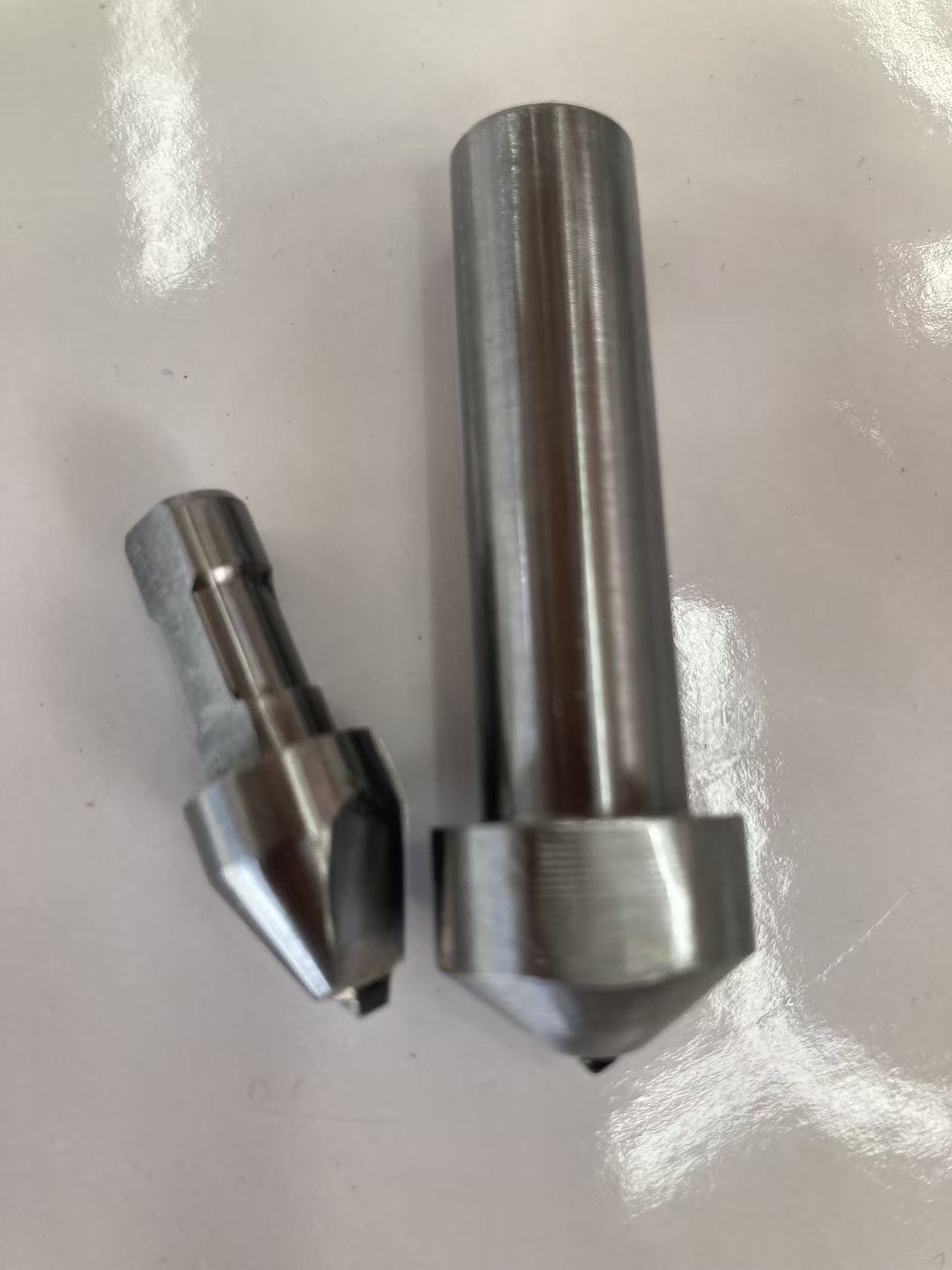
An axe type diamond dresser (also called chisel type or blade type) features a flat, wedge-shaped diamond set into the shank. The diamond has a larger mass and a line-contact edge rather than a point.
Visual Description:
-
Shank diameter: typically 6-14mm (12mm is standard)
-
Diamond tip: flat, axe-shaped, chisel edge
-
Diamond exposure: 5-10mm
-
Diamond mass: larger than single point (0.5 – 2.0+ carats)
How It Works
The flat edge of the diamond contacts the grinding wheel across a line rather than a point. This larger contact area distributes wear, extends tool life, and provides aggressive dressing action.
Best Applications
| Application | Suitability |
|---|---|
| Large surface grinding wheels | ⭐⭐⭐⭐⭐ Excellent |
| Coarse grit wheels (#24-60) | ⭐⭐⭐⭐⭐ Excellent |
| Hard wheels (vitrified bonds) | ⭐⭐⭐⭐⭐ Excellent |
| Heavy dressing / stock removal | ⭐⭐⭐⭐⭐ Excellent |
| Form dressing | ⭐⭐⭐⭐ Good |
| Fine grit wheels (#80 and finer) | ⭐⭐⭐ Fair (may be too aggressive) |
| Precision dressing | ⭐⭐⭐ Acceptable (less precise than single point) |
Advantages
✅ Longer life – Larger diamond mass means significantly longer tool life
✅ Aggressive dressing – Removes dull wheel material faster
✅ Ideal for coarse wheels – Handles large grit sizes without damage
✅ More forgiving – Less sensitive to operator angle and technique
✅ Better for hard bonds – Vitrified wheels wear single points quickly; axe type handles them better
✅ Larger contact area – Distributes wear, extends diamond life
Disadvantages
❌ Higher initial cost – More diamond mass = higher price
❌ Coarser finish – May not produce as fine a wheel surface as single point
❌ Not for very fine wheels – Can be too aggressive on #120+ grit wheels
❌ Larger tool – May not fit small dressing holders
Typical Diamond Carat Sizes:
| Application | Recommended Carat |
|---|---|
| Small/medium wheels, light dressing | 0.50 – 0.75 ct |
| Large wheels, medium dressing | 0.75 – 1.25 ct |
| Heavy dressing, coarse wheels, production | 1.25 – 2.00+ ct |
Side-by-Side Comparison: Single Point vs. Axe Type
| Feature | Single Point | Axe Type (Chisel) |
|---|---|---|