
Introduction
Cutting ceramics and glass is not easy.
These materials are:
-
Hard – They resist abrasion and wear down conventional blades quickly
-
Brittle – They chip, crack, or shatter if cut improperly
-
Abrasive – They act like sandpaper on cutting tools
For years, manufacturers and fabricators struggled with blades that:
-
Went dull after a few cuts
-
Chipped edges excessively
-
Needed frequent replacement
-
Cost too much per cut
Then came sintered diamond blades.
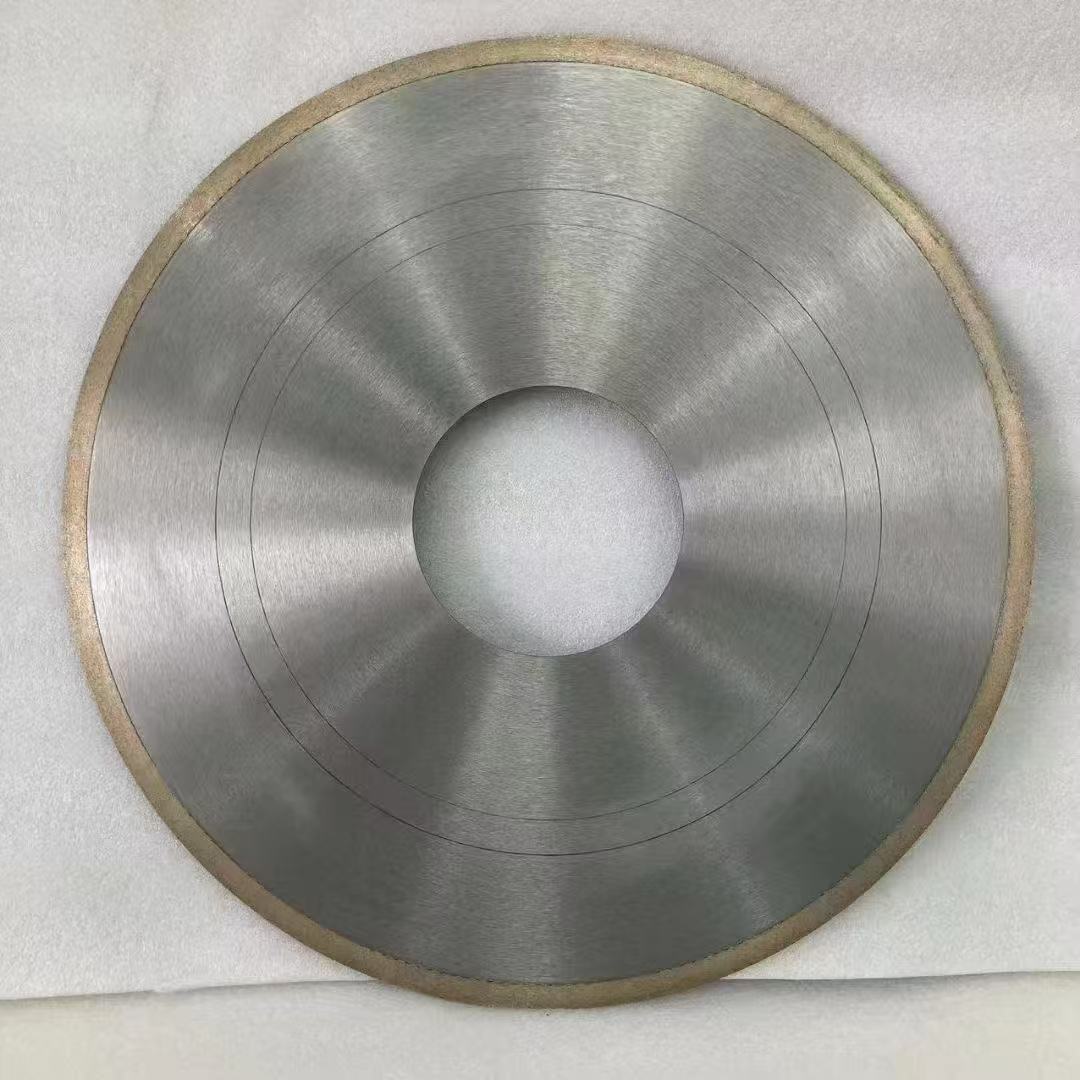
In this article, we focus on one specific workhorse: the 500mm sintered diamond cutting blade for ceramics and glass – and explain why sintered technology outperforms electroplated blades in production environments.
What Is a Sintered Diamond Cutting Blade?
Let's start with the basics.
A sintered diamond blade is made by mixing industrial diamond powder with metal powders (typically bronze, cobalt, or iron-based alloys) and then heating and compressing the mixture in a furnace. The metal melts slightly and fuses around the diamond grains, creating a solid, dense matrix.
Key characteristic: Diamond grains are distributed throughout the entire working layer – not just on the surface.
How It Compares to Electroplated Blades
| Feature | Electroplated Blade | Sintered Blade (This Product) |
|---|---|---|
| Diamond location | Single layer on surface | Throughout entire bond thickness |
| Diamond layer thickness | Very thin (0.1-0.3mm) | Thick (5-12mm segment) |
| Self-sharpening? | No | Yes |
| Can be dressed? | No | Yes |
| Relative blade life | 1x (baseline) | 3-10x longer |
| Cost per cut | High | Low |
| Best use | Occasional / short runs | Production / high volume |
The "Self-Sharpening" Mechanism
This is the most important concept to understand.
As a sintered blade cuts:
-
The metal bond wears away slowly
-
Dull diamond grains are released
-
Fresh, sharp diamond grains are exposed
-
The blade stays sharp throughout its life
An electroplated blade has no such mechanism. Once the single layer of diamond wears off, the blade is dead.
Why 500mm? The Right Size for Production Cutting
The 500mm diameter is a sweet spot for many ceramic and glass cutting applications.
| Diameter | Typical Use | Advantages |
|---|---|---|
| 100-200mm | Handheld saws, small tile cutters | Portable, but limited cut depth |
| 250-350mm | Standard tile saws | Good for most tile work |
| 400-500mm | Production bridge saws, large slab cutters | Deep cut capacity, stable, long life |
| 600mm+ | Industrial block cutters | Very heavy, specialized machines |
A 500mm blade offers:
-
Cut depth of approximately 180-200mm (7-8 inches)
-
Good stability on large-format bridge saws
-
Long usable life before blade replacement
-
Wide availability of machines that accept this size
Applications: What Can You Cut With a 500mm Sintered Diamond Blade?
1. Ceramic Tiles & Porcelain Slabs
Material: Glazed ceramic, full-body porcelain, large-format slabs (up to 3m x 1.5m)
Challenge: Porcelain is extremely hard and dense. Standard blades glaze over quickly.
Solution: The sintered diamond blade maintains sharpness through thousands of linear meters of cutting.
Typical user: Tile manufacturers, stone fabricators, construction contractors.
2. Glass Sheets & Glass Blocks
Material: Float glass, tempered glass, laminated glass, glass blocks
Challenge: Glass chips easily. Heat causes thermal cracks.
Solution: The sharp diamond grit and proper water cooling produce clean edges with minimal chipping.
Typical user: Glass fabricators, architectural glass installers, shower door manufacturers.
3. Quartz & Engineered Stone
Material: Quartz countertop slabs (e.g., Caesarstone, Silestone)
Challenge: Quartz is extremely hard (Mohs 7) and contains resin binders that can load blades.
Solution: Sintered diamond cuts cleanly through quartz without glazing.
Typical user: Countertop fabricators, stone shops.
4. Ferrites & Technical Ceramics
Material: Soft ferrites, alumina ceramics, zirconia
Challenge: These materials are very hard and abrasive. They wear out blades quickly.
Solution: The high diamond concentration in sintered blades provides long life even on technical ceramics.
Typical user: Electronics manufacturers, ceramic component suppliers.
5. Refractory Materials
Material: Fire bricks, ceramic fiber boards, kiln furniture
Challenge: These materials are abrasive and can contain hard particles.
Solution: Sintered diamond cuts through refractory materials without rapid wear.
Typical user: Refractory installers, kiln manufacturers.
Technical Specifications of This 500mm Blade
| Parameter | Value |
|---|---|
| Outer Diameter (OD) | 500 mm |
| Abrasive | Industrial diamond (synthetic) |
| Bond | Sintered metal (bronze-based) |
| Diamond distribution | Throughout segment thickness |
| Segment type | Continuous rim, segmented, or turbo (options available) |
| Segment height | 5-12 mm (depending on application) |
| Blade thickness | 2.0 – 4.0 mm (customizable) |
| Arbor / bore | Customizable per machine (standard: 25.4mm, 50mm, etc.) |
| Grit options | #30-60 (fast cut) to #100-200 (smooth finish) |
| Target materials |